


Integers - ALiM
This resource supports teachers to assess and find appropriate activities for students who need acceleration in their understanding and application of integers.
About this resource
New Zealand Curriculum: Level 4
Learning Progression Frameworks: Measurement sense, Signpost 7 to Signpost 8
These activities are intended for students who use a range of strategies for the addition and subtraction of whole numbers. These strategies may include elements of integer thinking such as solving 52 – 28 by first solving 52 – 30, then compensating by adding two, i.e., 52 – 28 = 52 – 30 + 2 = 24. Students should also know their basic addition facts and the corresponding subtraction facts.
Integers
The following diagnostic questions indicate students’ understanding of, and ability to locate integers on a number line, and to add and subtract both positive and negative integers. Allow access to pencils and paper. A calculator can be used to check answers if needed.
The questions should be presented orally and in written form (Intergers) so that the student can refer to them. The questions have been posed using a money context but can be changed to other contexts that are engaging to your students.
Required materials
See Materials that come with this resource to download:
- Integers (.pdf)
Activity
Use Intergers, page 2.
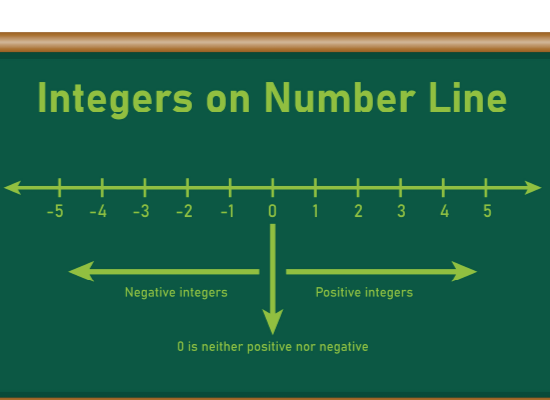
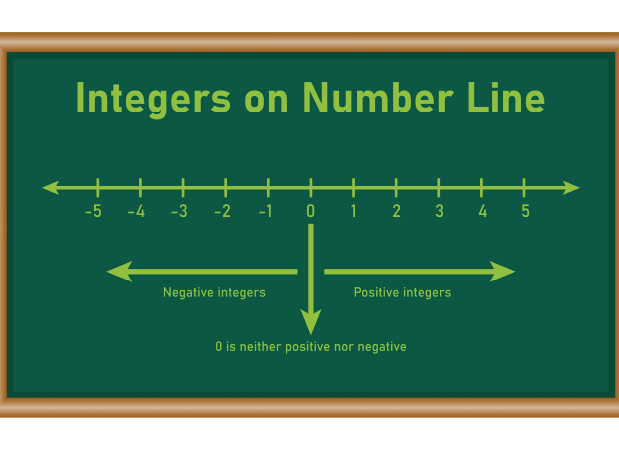
Here is a number line from positive ten to negative ten. Point to where these numbers would be on the line.
- Zero (0)
- Five (5)
- Negative Five (-5)
- Negative Eight (-8)
I will point to a place on the number line. Write the number that would be in that place.
Point to the location of 4, -2, and -11.
Signs of fluency and understanding
- Recognises the symmetry of the integer number line about zero to locate zero, positive five, and negative five. Moves three imaged units left from -5 to locate -8. Records the correct numbers for the three locations.
What to notice if they don’t solve the problem fluently
- Confuses the direction of negative numbers compared to positive numbers. May record -8 to the left of -10. This indicates that the student needs more experience with creating and reading integer number lines, such as working with thermometers and scales above and below sea level.
- Unable to equally divide sections of the number line to locate fractions may point to a place close to -10 for -8 without considering the size of each unit, which indicates that the student needs more experience with creating measurement scales by equal partitioning spaces.
- Unable to record negative numbers suggests that the student needs more exposure to integer scales.
Supporting activity
Use Intergers, page 3.
- A circle with a positive sign means positive one. A circle with a minus sign means negative one.
Match the pictures with the numbers.
Explain what you have done.
Signs of fluency and understanding
- Understand that positive one and negative one combine to make zero. Recognise that three negatives and one positive combine to make negative two, and that positive two and negative two combine to make zero.
What to notice if they don’t solve the problem fluently
- Confused by the combination of positive and negatives and unsure of how to combine three negatives and one positive, indicates that the student needs more experience applying integers to real-world situations like dollars and debts.
- Unable to represent any of the collections using integers indicates that the student does not recognise that integers are counts of positive and negative ones.
Supporting activity
Use Intergers, page 4.
Poppy runs a bakery stall to raise money for her sports trip. She collects $450 in sales, and her costs are $550.
- How much money does her stall make?
- Which equations represent this story?
Signs of fluency and understanding
- Easily finds the answer as -$100 (negative or minus one hundred dollars).
- Recognises that both 450 + -550 = -100 and 450 – 550 = -100 represent the situation.
What to notice if they don’t solve the problem fluently
- Selects 550 – 450 = 100 as the equation. This may indicate that the student believes that subtraction must always involve a larger number minus a smaller number. They may believe that “subtraction makes smaller" and that "subtraction can't go below zero”.
- Selects 450 – 550 = -100 as the only equation that matches the situation. This may indicate that the student does not recognise that combining positive and negative amounts can be represented as addition.
Supporting activity
Use Intergers, page 5.
- Which number line represents -5 - -3 = [ ]?
Signs of fluency and understanding
- Recognises that subtracting negative three is equivalent to adding positive three, chooses the top right number line, and correctly gives the answer as negative two (-2).
What to notice if they don’t solve the problem fluently
- Selects the top left number line and gives the answer negative eight. This may indicate that the student believes that subtraction always results in an answer that is smaller than the starting number.
- Selects the bottom left number line. The student may be simply choosing an option that contains 5 and 3. It may also indicate confusion between "–" as the symbol for subtraction and "–" as the symbol for direction on the number line.
- Selects the bottom right number line. This may indicate that the student believes that -3 + 5 has the same answer as -5 - -3. The student needs support to understand that the order of the numbers matters for subtraction.
Supporting activity
Teaching activities
Heading
Integer number lines
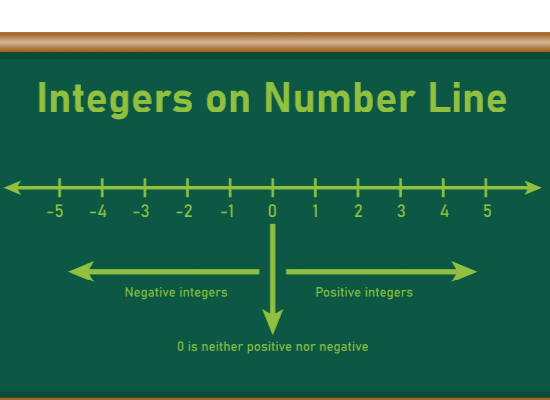
The purpose of this activity is to support students in identifying the relative position of integers on a number line.
1 of 4Subtracting integers
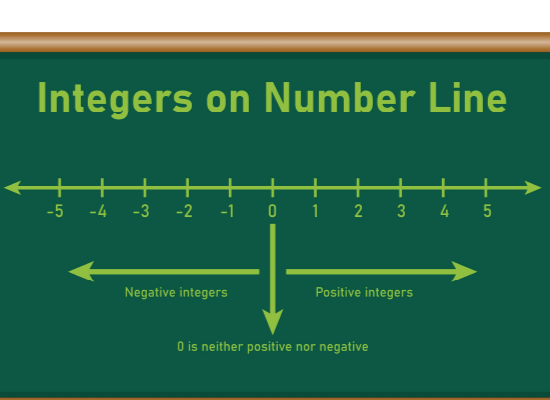
The purpose of this activity is to support students to understand and fluently carry out subtraction with integers.
2 of 4Adding integers
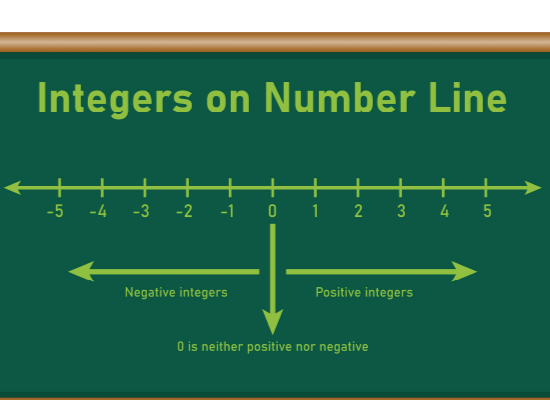
The purpose of this activity is to support students to understand addition as it applies to integers.
3 of 4Representing quantities as integers
The purpose of this activity is to support students to understand that integers are often used to represent a state of balance.
4 of 4
The quality of the images on this page may vary depending on the device you are using.